“WikiEXPO Global Guest Interview – Fu Peng: Trading Risks in an Era of High Debt”

Abstract:On July 23–24, renowned economist Fu Peng, a specially appointed financial think-tank expert for national media outlets such as Xinhua News Agency and China Central Television, will be in Hong Kong to attend the WikiEXPO. He will join global industry leaders, regulatory representatives, and fintech experts to discuss new challenges to trading safety amid macroeconomic shifts.
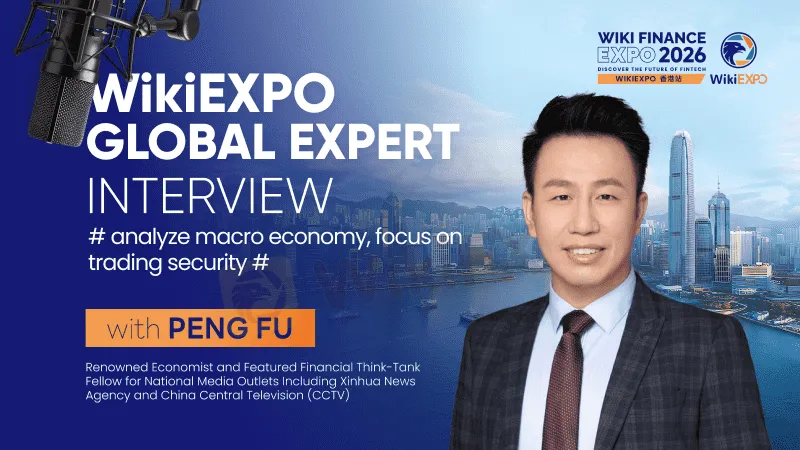
On July 23–24, renowned economist Fu Peng, a specially appointed financial think-tank expert for national media outlets such as Xinhua News Agency and China Central Television, will be in Hong Kong to attend the WikiEXPO. He will join global industry leaders, regulatory representatives, and fintech experts to discuss new challenges to trading safety amid macroeconomic shifts.
Against the backdrop of an accelerating restructuring of global financial markets, the trading environment is facing unprecedented uncertainty. Centered on this core theme, WikiEXPO conducted an exclusive interview with Mr. Fu Peng. This interview will be released as a series, with each installment focusing on a key issue and presenting Mr. Fu Pengs in-depth insights into the evolving global landscape of trading security.
Following the first installment, which focused on changes in the macro landscape, this second part of the series addresses a critical question:
As global debt and asset prices rise simultaneously, is trading risk being repriced?
Is risk accumulating amid persistently high global debt levels?
In this installment, Fu Peng shares his views on the current historical highs in global debt and asset prices, offering his assessment of the underlying structure of market risks.
Fu Peng believes that this risk is indeed gradually emerging.
First, looking back over more than a decade since the 2008 global financial crisis, major economies around the world have essentially followed a similar policy path: By shifting large-scale debt to the government sector and maintaining a prolonged low-interest-rate environment alongside extremely loose monetary policies, they aimed to stabilize market risks and buy time for economic restructuring.
This policy mix has provided strong “support” for financial assets over the past decades.
However, with ongoing technological advancements, the global productivity structure is now undergoing significant changes, and a new set of production relationships for economic development is being reshaped. In this context, the previous model—relying on loose policies to sustain asset prices—may gradually shift.
In addition, Fu Peng points out that debt itself is not necessarily the problem. What truly matters is how the debt is sustained and how policies evolve. If this support system begins to turn more conservative, certain financial assets could face notable trading risks.
In other words, someone in the market will ultimately have to “pay” for these risks.
That said, unlike in the past, current technological progress and improvements in productivity may help buffer the widespread transmission of risk. Therefore, such risks may not necessarily evolve into a systemic financial crisis.
However, for assets that have been heavily supported by liquidity and have seen continuously rising valuations over the past decades, Fu Peng believes:
“There may be a final liquidity-driven rally.”
July in Hong Kong: Discussing the Future of Trading Safety
As a globally recognized fintech and trading industry event, WikiEXPO has always been committed to gathering industry insights, fostering open dialogue, and driving the fintech ecosystem's continuous evolution.
At the upcoming WikiEXPO Hong Kong, Fu Peng will share more in-depth perspectives. We look forward to meeting industry participants from around the world offline to explore a more robust, efficient, and transparent fintech future together.
📍 July 23–24, Hong Kong
Engage in a live dialogue with Fu Peng and seek certainty in an uncertain era.
WikiEXPO Hong Kong — we look forward to seeing you there.

Read more
KapitalRS Exposure: Traders Report Withdrawal Issues & Trade Manipulation
Have you had to encounter numerous denials on fund withdrawals by KapitalRS, a Serbia-based CFD broker? Were you asked to pay additional fees for withdrawal access? Did you incur losses on your forex positions due to the confusion concerning the bonus? Does your overall trading cost go up due to the wide spreads charged by the forex broker? These issues have arguably become the highlight on several broker review platforms. In this KapitalRS article, we have elaborated on numerous complaints against the brokerage firm. Take a look!

Trive Under Fire: Employees Demand Withheld Salaries
Trive, a Netherlands-based leading CFD broker across forex, stocks, indices and commodities, is facing ire from its employees on the unpaid salary crisis that has haunted them for four months starting from November 2025. Upset over such a long delay, employees have been using social media platforms to express their frustration. Read on for more revelation.
LONG ASIA Review: Examining User Allegations Concerning Withdrawal Denials
Did you have a good trading experience with LONG ASIA initially before it went bad, as you sought fund withdrawals from the platform? Did Saint Vincent and the Grenadines-based forex brokerage house deny you access to funds despite numerous withdrawal requests? Have you lost your funds because of this denial? Failing to log in despite numerous attempts? You are not alone! Many traders have accused the broker of these trading practices. In this LONG ASIA review article, we have highlighted some complaints against the broker. Read on as we share all these details with you.
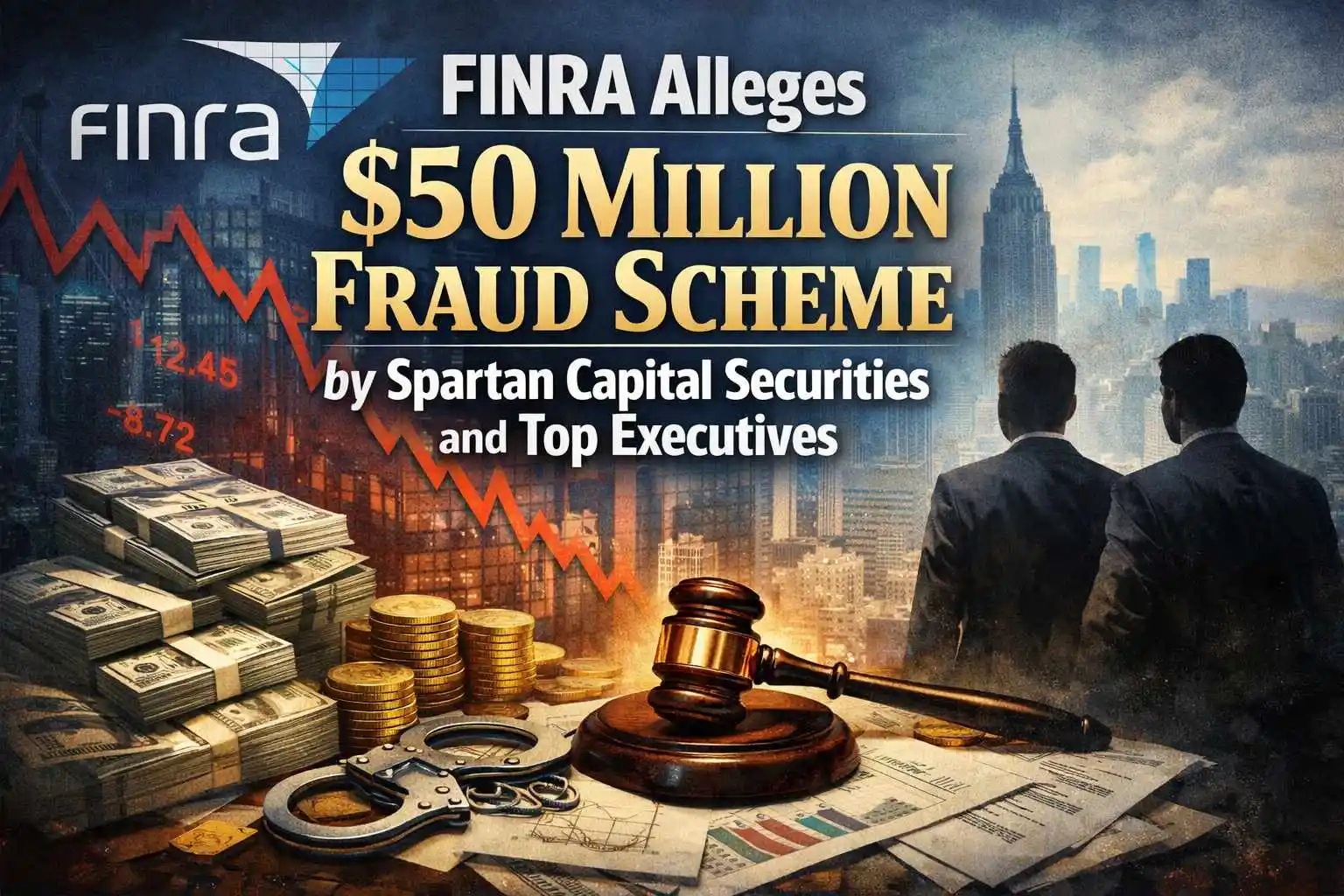
FINRA Alleges $50 Million Fraud Scheme by Spartan Capital Securities and Top Executives
The Financial Industry Regulatory Authority (FINRA) has filed a formal complaint against Spartan Capital Securities LLC, its CEO John Dennis Lowry, and its former Chief Compliance Officer (CCO) Kim Marie Monchik. The Department of Enforcement alleges a sophisticated scheme to defraud customers during a pharmaceutical company’s initial public offering (IPO), resulting in over $50 million in profits for the firm and its insiders while customers were left with dramatic losses.
WikiFX Broker
Latest News
Wholesale prices rose 0.7% in February, much more than expected and up 3.4% annually
WikiFXKapitalRS Exposure: Traders Report Withdrawal Issues & Trade Manipulation
WikiFXOil Prices Climb as Geopolitical Tensions Spotlight Strait of Hormuz Risks
WikiFXCapex Review: The High-Stakes Gaslighting of Retail Traders
WikiFXGold and Silver Pumping Again?
WikiFXPepperstone User Reputation: Looking at Real User Feedback and Common Complaints to Check Trust
WikiFXMazi Finance Review: Warning Signs and Customer Problems Revealed
WikiFXMalaysia’s Biggest Money Game Disasters: How Three Scams Wiped Out Billions of Ringgit
WikiFXIs MT.COOK a Safe Bet for Your Forex Trading? A Deep Dive into MT.COOK Review and Regulation
WikiFXIs M4Markets Safe or Scam? Examining Real User Experiences, Reputation & Common Issues
WikiFXRate Calc
