Bond Markets Signal 'Hawkish' Risk: The Era of Cheap Money is Officially Over

Abstract:Despite the Federal Reserve cutting rates to the 3.50%-3.75% range, long-term Treasury yields remain stubbornly high, suggesting the market believes the 'neutral rate' has structurally shifted higher.
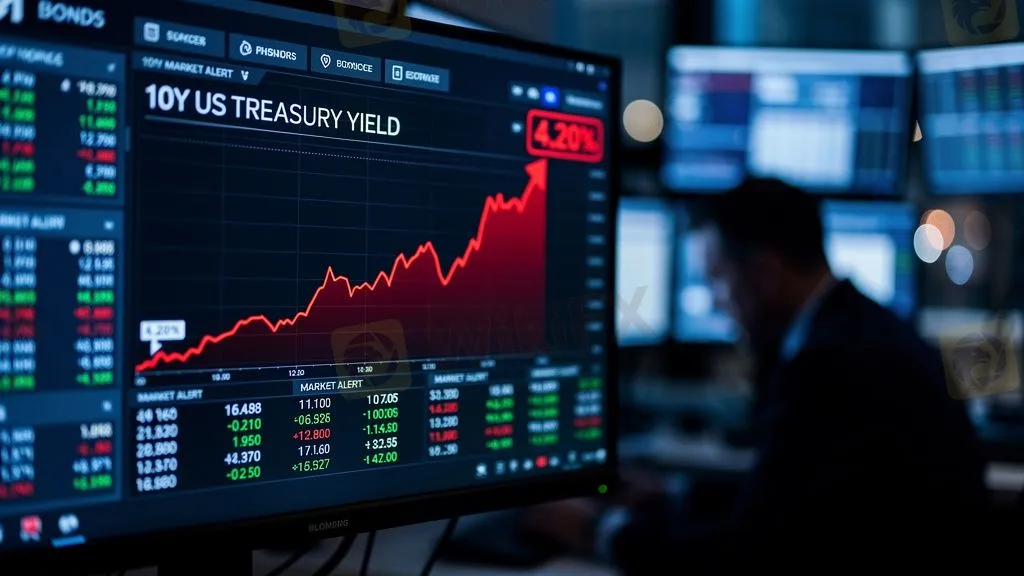
Despite the Federal Reserve cutting rates to the 3.50%-3.75% range, long-term Treasury yields remain stubbornly high, suggesting the market believes the 'neutral rate' has structurally shifted higher.
The Bear Steepening
A disconnect is widening between the Fed's easing narrative and the bond market's reality. The benchmark 10-year Treasury yield continues to hold around 4.15%-4.20%, refusing to track the short-end lower. This “bear steepening” of the yield curve implies that investors demand a higher premium for holding long-term debt, fearing inflation will re-accelerate in 2026 due to fiscal deficits, AI-driven productivity demand, and potential tariff shocks.
R-Star Repricing
Looking ahead to 2026, Wall Street consensus on the “neutral rate” (r-star) has drifted up from the pre-pandemic 2.5% to a new range of 3.0%-3.5%. This repricing suggests that even if the Fed cuts further, the floor for rates will be significantly higher than in the previous decade.
For currency markets, this limits the downside for the USD in the medium term. If US yields refuse to compress, the interest rate differentials that have punished the Dollar in late 2025 may stabilize, potentially trapping EUR/USD bears who are betting on a straight-line Dollar collapse.
Read more

Foreign Institutions Step Up Holdings of China Government Bonds
Data shows foreign institutions increased holdings of China’s government bonds by 70,671 million yuan in April, raising their holdings of yuan bonds for the 17th consecutive month.
Fitch list of highest-risk energy bonds, risk of 'imminent default' - Business Insider
Nearly half of Fitch's "top bonds of concern" are oil and gas companies, which have been hammered by the collapse in demand for crude oil.
How Argentine traders make 7% returns in minutes from capital controls
The fully-legal trading method uses the difference in the official exchange rate and brokers' exchange rate to net thousands of pesos in profit.
Stock-market sell-off cause, and why it's now bullish: JPMorgan
Kolanovic's research is known to be market-moving. He unravels what really drove the market's recent plunge and why it's bullish going forward.
WikiFX Broker
Latest News
LQH MARKETS Review: Multiple Traders Report Withdrawals Blocked and Accounts Terminated
WikiFXSpread Cheating: The Invisible Trading Cost That Could Be Working Against You
WikiFX"They Want to See Your Face": Inside ATFX Cambodia's Rise
WikiFXTrump Memecoin Faces SEC Scrutiny After Nearly One Million Investors Suffer Heavy Losses
WikiFXApple Faces Lawsuit Over Fake Crypto App Exposing $1.8 Million Theft
WikiFXBorn2trade Adds Copy Trading to 1:5000 Leverage Platform
WikiFXLevels Review: No Regulation and Mounting Withdrawal Complaints – What Traders Need to Know
WikiFXPILOTFX Review: What Traders Should Know Before Depositing
WikiFXLMAX Group Review 2026: Users Report Disturbing Withdrawal Issues - Is the Broker Still Reliable?
WikiFXLuno Review: Unregulated Broker Warning After Frozen Accounts and Blocked Withdrawals
WikiFXRate Calc

