Forex Trading Time in India EXPLAINED – What Every Trader Must Know!

Abstract:Wondering how much time you have to trade currencies in the Indian foreign exchange market? Can you do it during the daytime or at your convenience? You have got all your answers here. In this article, we have covered the forex trading time in India. Read on!

Wondering how much time you have to trade currencies in the Indian foreign exchange market? Can you do it during the daytime or at your convenience? You have got all your answers here. In this article, we have covered the forex trading time in India. Read on!
Forex Trading Overview - Definition, Trade Options
Forex trading involves currency pairs, where traders exchange one currency for another. As a trader, you speculate on the direction of the currency pair, upward or downward, based on the economic development and technical analysis.
Upward trends indicate opening a buy position, while downward trend indicates selling the asset before the value drops significantly.
The forex broker charges a spread, which is the difference between the bid price (purchase price) and ask price (selling price) of a currency pair. Further, to help traders gain a wider market position, forex brokers offer them a ‘leverage’ option with less capital.
Most importantly, the currency pairs allowed to trade in India include INR/USD, INR/GBP, INR/JPY, and INR/EUR. You can also trade on cross-currency pairs other than INR.
Forex Trading Time in India Revealed
Forex market hours in India are based on the currency pairs involved in trading. INR pairs will have currency trading for eight hours from 9 a.m. to 5 p.m. Cross-currency pairs will have trading sessions extending till 7.30 p.m. During this period, forex traders in India can buy and sell exchange-traded currency derivatives such as futures for popular pairs - USD/JPY, EUR/INR, EUR/USD, USD/INR, GBP/INR, JPY/INR, and GBP/USD.
Forex market hours allowed in India are strategically planned to overlap with major global markets, resulting in massive liquidity and volatility for several currency pairs. However, traders should also exercise caution during the forex trading time in India. The reason is that extreme volatility presents both opportunities and risks. Being aware of global economic developments, central bank stances, and geopolitical scenarios can help traders decide their investment moves within the forex trading hours in India.
Will I be Allowed to Trade 24 Hours in the Indian Forex Market?
As per the rule, trading on currency pairs involving INR is possible for 24 hours a day. The regulated hours are from 9 a.m. to 5 p.m. for trading on such pairs. Cross-currency pairs are allowed to trade on until 7.30 p.m.
Beyond these hours, you cannot trade through regulated exchanges. However, traders can trade in currencies outside of the forex trading time in India through international forex brokers with access to markets worldwide.
For informed trading, traders must understand the trading hours involved in different currency pairs and the risks related to trading outside of the regulated hours.
When is the Best Forex Trading Time in India?
The best forex trading time in India usually overlaps with major markets worldwide, allowing increased liquidity, higher trading volumes, and optimal profit avenues owing to potentially significant price movements.
One of the most active forex trading sessions that overlap the New York and London sessions falls between 7 p.m. and 12 a.m. (IST).
This timeframe allows traders to maximize increased volatility and liquidity, especially for major currency pairs such as USD/JPY, GBP/USD, and EUR/USD.
However, the best trading time in India depends on trading strategies and risk tolerance.
Wrapping Up
Forex trading in India comes with clearly defined time frames for both INR-based or cross-currency pairs. While INR pairs are allowed to be traded from 9 a.m. to 5 p.m., cross-currency pairs can be traded until 7:30 p.m. through Indian exchanges. Even though 24-hour forex trading is possible through international brokers, it falls outside SEBI-regulated hours and may entail enhanced risks.
Making the most of your trades requires aligning your trading strategies with global market overlaps, especially between 7 p.m. and 12 a.m. IST when the New York and London markets are open.
WikiFX Masterminds - Where you learn the art of forex trading - is now live!
Join the group with these simple steps -
1. Scan the QR code placed right at the bottom.
2. Download the WikiFX Pro app.
3. Afterward, tap the ‘Scan’ icon placed at the top right corner
4. Scan the code again.
5. Congratulations, you are part of the community.
Read more

Tattvam Review 2026: Investigating Complaints Concerning Trade Executions
Did you encounter trade-related concerns with Tattvam, a Mauritius-based brokerage entity? Several users have reportedly accused the broker of cancelling profitable trades, allegedly citing scalping as the reason. At the same time, traders have reportedly expressed concerns over the lack of understanding among the broker officials about critical trading aspects such as copy trading. In this Tattvam review, we have carefully examined user-reported allegations. Additionally, we have given a regulatory overview of the broker.

suxxessfx Review 2026: Funds Worth $5K-$42K Reportedly Lost. Check Our Investigation!
suxxessfx, a Seychelles-based brokerage entity, grabbed massive ire from traders on broker review platforms such as WikiFX, a globally recognized forex broker regulation inquiry app. Exposure reports have revealed fund losses worth over $5K-$42K on the broker’s trading platform. This suxxessfx review examines serious user allegations and its regulatory status. Read on!
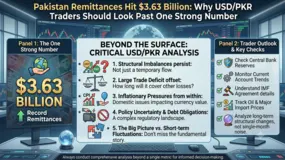
Pakistan Remittances Hit $3.63 Billion: Why USD/PKR Traders Should Look Past One Strong Number
Pakistan remittances reached $3.631 billion in July 2026, up 13% year on year and 4.5% from June, according to the latest State Bank of Pakistan data release. The SBP remittances update is a useful external-sector input, but it is not a currency forecast. This guide explains what the inflow can mean for the Pakistan forex market and USD PKR, and what it cannot prove about the next Pakistan rupee move.

Jackson Hole 2026 Preview: When Is Fed Chair Kevin Warsh Speaking and What Could Move Markets
Fed Chair Kevin Warsh is listed to deliver Jackson Hole keynote remarks on 28 August 2026. See the schedule, market scenarios and USD-gold watchlist.
WikiFX Broker
Latest News
FOMO in Forex: Why a Missed Move Feels Like a Real Loss
WikiFXTreasury Buybacks Alter Dollar Liquidity Flows
WikiFXHF Market Review: A CySEC Clone Warning and an Unreachable Website
WikiFXBRAC EPL Review 2026: A Major Dhaka Stockbroker with a 2.06 WikiFX Score and No Recorded Regulation
WikiFXFBS Review: Broker Regulation Warnings and Withdrawal Complaints Traders Cannot Ignore
WikiFXIG Review: Withdrawal Complaints Hit a Globally Known Broker
WikiFXFASTWIN Review: What Traders Should Know Before Depositing
WikiFXFXDD Malta Licence Ends: What Traders Need to Know
WikiFXEC Markets Marketing Director Nick Xydas Steps Down
WikiFXInteractive Brokers Review 2026: Regulation, Fines and Withdrawal Risks
WikiFXRate Calc

