Fed Rate Cuts May Not Happen in July, Markets Await Policy Meeting Minutes Release

Abstract:Federal Reserve officials had a meeting on June 17-18 during which some of them expressed a fall in interest rates in July. However, a lot of policymakers are still worried about the inflationary pressures that might emerge from US President Donald Trump’s import tariff decisions aimed at changing global trade. So, it seems the rate cut may not happen in July. Read this to know more.
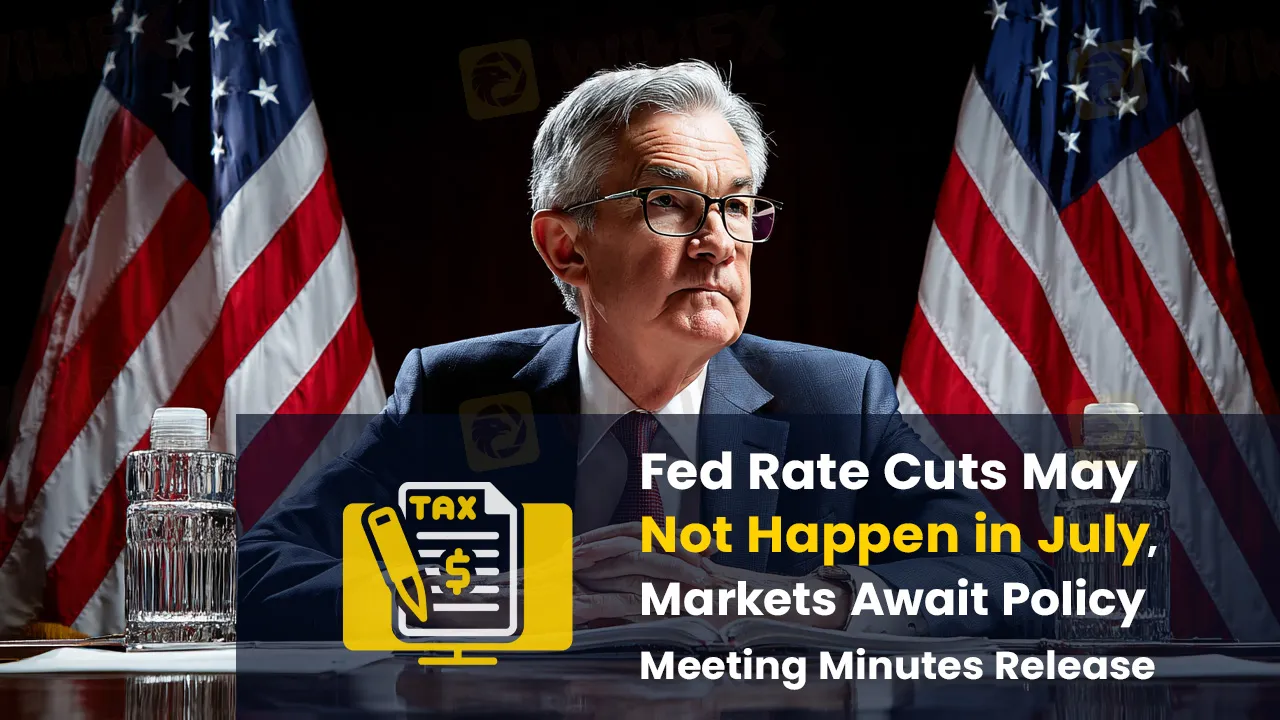
Federal Reserve officials had a meeting on June 17-18 during which some of them expressed a fall in interest rates in July. However, a lot of policymakers are still worried about the inflationary pressures that might emerge from US President Donald Trumps import tariff decisions aimed at changing global trade, as noted in the Federal Open Market Committee (FOMC) Minutes.
The minutes released on Wednesday pointed out that most participants felt that rate cuts would be appropriate later this year, acknowledging that price shock from tariffs will likely be temporary or modest.
Here are the Federal Reserve Participant Quotes
The meeting minutes showed agreement among most participants at the Federal Reserve Meeting between 17-18 June saw Fed funds rate reduction appropriate this year.
A few participants expressed their willingness to consider a rate cut as soon as the July meeting provided the changes in data as per their expectations.
Some participants noted that having no rate cuts in 2025 is the most suitable path amid elevated inflation readings, increased business and consumer inflation anticipations, and existing economic resilience.
Several participants anticipated the fed funds rate to be way more than its neutral rate.
All participants, however, agreed on maintaining the Fed funds rate at the existing target="_blank" kwlink="6384064000816950219725">target range.
Although participants agreed that higher inflation and weaker labour market condition risks had subsided but still remained at elevated levels.
At the same time, participants felt that the uncertainty concerning the economic outlook is diminished with the reduction in expected and announced tariffs. However, overall, uncertainty continues to remain high.
Fed staff foresees increased GDP growth for 2025 compared to the previous forecast and estimated inflation to remain lower than the earlier projection.
How Did the Market React to the FOMC Minutes Release?
The FOMC Minutes release did not impact US Dollar much as it hovered around 97.50 with marginal gains and investors‘ caution following President Trump’s intent of imposing further tariffs.
At 18:00 GMT on Wednesday, the Federal Reserve Monetary Policy meeting minutes will be published. US policymakers decided to maintain the policy rate within the 4,25%-4.50% range. However, they were estimating two 25 basis-point rate cuts in 2025 as found on the revised Summary of Projections (SEP). Investors will scrutinize the discussions that led to holding the rates for now.
Fed Monetary Policy Meeting Chaired by Jerome Powell Decides to Maintain Status Quo on Interest Rates
The FOMC meeting in June, chaired by Jerome Powell, decided to maintain the status quo on interest rates. The policy statement issued saw the US central bank reiterating on the elevated inflation and solid labour market conditions marked by a low employment rate. The SEP demonstrated that despite seeing a 50 basis point policy rate cut in 2025, policymakers forecast just a 25 basis point cut in 2026 as opposed to the 50 bps cut estimates in Marchs SEP.
The post-meeting press conference saw Fed Chairman Jerome Powell reiterating that not being hurried to make any changes to the policy. Even though several Fed officials are open to interest rate reduction in July, the chances of happening are remote amid a strong employment report in June. The Fed will likely wait until September for monetary policy easing. During June 2025, the unemployment rate fell to 4.1% from 4.2% in May. Non-farm payrolls beat the market estimate of 110,000 by achieving a growth of 147,000 in June.
Want to know the latest forex updates? Download the WikiFX App today.

Join our growing WikiFX India community on Telegram by scanning the QR code below.

Read more

Monisha Chakraborty Appointed as RB Executive Director: What Does This Mean for India's FX Market?
The Reserve Bank of India has appointed Monisha Chakraborty as Executive Director with effect from 3 August 2026; she will oversee the Foreign Exchange Department and the Financial Markets Regulation Department. Chakraborty is a career central banker with over three decades of experience in Supervision, Foreign Exchange, and Government and Bank Accounts, and previously served as Banking Ombudsman. This report explains the significance of the new RBI Executive Director appointment for forex regulation India, the scope of the Foreign Exchange Department and the Financial Markets Regulation Department, and what authorised persons, banks, and forex market participants should monitor as the new ED takes charge.
RBI's $40.82 Billion Forex Surge: A Bigger Rupee Shield—or Just Borrowed Time?
RBI's concessional forex swap facility had mobilised $40.82 billion by 31 July 2026, with FCNR(B) deposits providing $36.725 billion of the total. This India-focused analysis separates confirmed inflows from the $80–85 billion SBI Research projection, compares the 2026 programme with the 2013 FCNR(B) window, and explains what the numbers can—and cannot—do for the Indian rupee. It also shows how banks, NRI depositors, importers, exporters and institutional investors may be affected, while highlighting the oil, dollar, maturity and hedging risks that still matter for USD/INR and forex trading in India.
Perry Warjiyo Resigns: Why the Rupiah Moved Above Rp18,000 per US Dollar
Perry Warjiyo resigned as Bank Indonesia governor, Destry Damayanti became acting governor, and the rupiah traded above Rp18,000. Here is what forex traders should monitor next.

Indians Dump Gold at a Record Pace; 50 Tonnes Sold in April-June 2026
Gold has grabbed attention throughout the April-June quarter 2026 in India, with domestic households selling off approximately 50 tonnes of the yellow metal during the period. The rampant sale was attributable to the mounting fears of a likely price crash, according to a report from The Economic Times, a leading English newspaper. Despite being considered a safe investment avenue, gold sales from domestic users in India hit a significant year-on-year jump of 43% during April-June 2026, according to the data published by the India Bullion and Jewellers Association (IBJA).
WikiFX Broker
Latest News
Luno Review: Unregulated Broker Warning After Frozen Accounts and Blocked Withdrawals
WikiFXGaitame Finest Review 2026: Regulation, MT4/MT5 Access, and User Feedback
WikiFXLOYAL PRIMUS Review: Accounts Frozen After Withdrawal Requests – What Traders Need to Know
WikiFXG4Trade Review: Withdrawal Warning Around a New Forex Broker
WikiFXMoneta Markets Receives UAE Category 5 Licence
WikiFXMetaTrader Basics: Place Your First Trade
WikiFXOJK Revokes BTPN Syariah Ventura Licence, SMBC Speaks Out
WikiFXRand Gains as Iran Talks and Soft US Jobs Data Hit Dollar
WikiFXKeynes Investment Review: No Regulatory Licence Found, Should You Trust It?
WikiFXTrade24Seven Review: What Traders Should Know Before Depositing
WikiFXRate Calc

